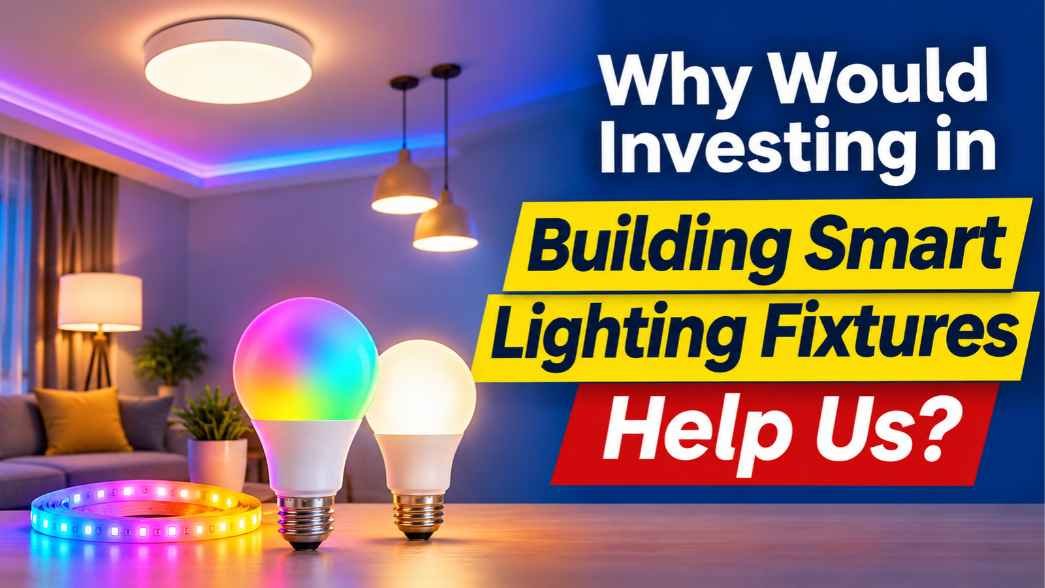
Why would investing in building smart lighting fixtures help us? The short reason is money and comfort. Smart fixtures use LED light. They also have sensors and a small network chip. So the lights dim or turn off when no one needs them. A building wastes less power, pays smaller bills and gets better light for the people inside.
This guide explains every benefit in plain words. You will see real savings numbers from U.S. energy research. You will see what smart fixtures can do, what they cannot do, what they cost you up front, and how to plan the upgrade. You should not need another website after this one.
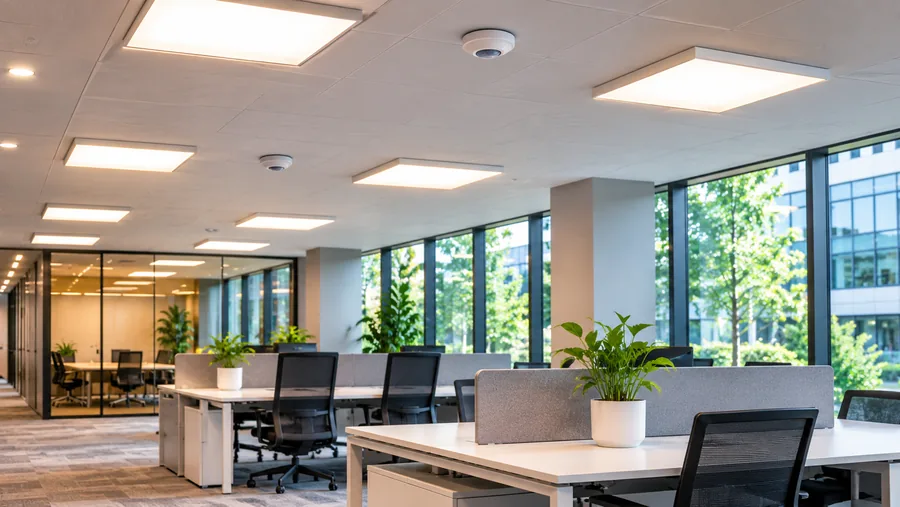
Quick answer: Smart lighting fixtures help a building in three main ways. First, LED fixtures use at least 75% less energy than old incandescent bulbs, says the U.S. Department of Energy. Second, smart controls cut lighting energy even more. A Berkeley Lab review of 240 savings results found about 24% savings from occupancy sensors and about 38% when several control types work together. A DesignLights Consortium study found networked controls cut LED lighting energy by 47% on average. Third, you get longer-lasting lights, better comfort, safer halls and parking areas, and useful data about how rooms are used. Savings depend on the building, so plan and set up the system well.
What Are Smart Lighting Fixtures in a Building?
A light fixture is the whole light unit on your ceiling or wall. It holds the light source, the housing and the wiring. A smart lighting fixture adds three extra parts:
- An LED light source that can dim smoothly.
- A sensor that notices people, daylight or both.
- A wireless or wired control chip that links the fixture to other lights, a wall panel, an app or a building system.
Some buildings put the sensor inside each fixture. This is called luminaire level lighting control. Other buildings use a few sensors per room plus smart switches. Both are smart lighting. The goal is the same: give the right light, in the right place, at the right time.
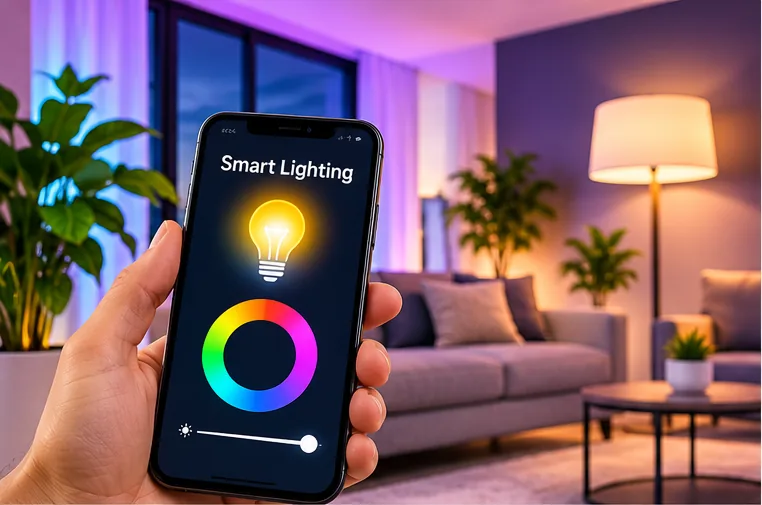
You can use the same idea at home. Smart bulbs and smart switches are the small version of it. Our guide on how to set up smart lighting shows the home setup step by step.
Why Would Investing in Building Smart Lighting Fixtures Help Us? 9 Key Benefits
Here are the benefits one by one. Each one has a short “what this means for you” note so you can judge it fast.
1. It Cuts Lighting Energy by a Large Amount
The first saving comes from the LED itself. The U.S. Department of Energy says residential LEDs use at least 75% less energy than incandescent lighting and last up to 25 times longer.
The second saving comes from the smart controls. Researchers at Lawrence Berkeley National Laboratory studied 240 savings estimates from 88 sources. Their best average estimates were:
- About 24% savings from occupancy sensors.
- About 28% savings from daylight controls.
- About 31% savings from personal tuning, where people set their own light level.
- About 36% savings from institutional tuning, where the building sets the right level for each space.
- About 38% savings when several methods are combined.
The DesignLights Consortium (DLC) looked at real data from 114 commercial buildings. It found that networked lighting controls cut the energy of already-installed LED lighting by 47% on average. Results ranged widely, from 2% to 91%. You can read more on the DesignLights Consortium website.
What this means for you: The LED swap gives the first big drop. The smart controls take a big share of what is left.
2. It Lowers Electric Bills Every Month
Lighting is a big part of a commercial building’s power use. The U.S. Energy Information Administration says lighting used about 17% of electricity in U.S. commercial buildings in 2018. In U.S. homes, lighting was about 6% of electricity use in 2020.
So the bill savings matter most in offices, schools, shops, warehouses, hotels and apartment common areas. Those places have many lights that run for long hours. At home, the savings are smaller but still real. Our post on whether smart lights use more electricity shows the small standby cost of smart bulbs and when they save power.
What this means for you: The more lights you have and the longer they run, the faster the savings add up.
3. Lights Turn Off When Rooms Are Empty
People forget to switch lights off. Meeting rooms, restrooms, storage rooms and stairwells often sit empty with the lights on. Occupancy sensors fix this. They turn lights on or up when someone walks in. They turn lights down or off after the room is empty for a set time.
A vacancy sensor is a close cousin. You switch the light on by hand, and the sensor turns it off when you leave. This saves even more in rooms with good daylight.
4. It Uses Free Daylight
Daylight harvesting uses a light sensor near windows. When sunlight is strong, the fixtures near the window dim. When clouds come or evening arrives, they brighten again. The room stays at a steady light level, and you pay for less electric light.
This works best in rooms with large windows, skylights and open floor plans. A room with no windows gets little from this feature.
5. Less Maintenance and Fewer Bulb Changes
LED fixtures last far longer than old bulbs, so staff climb ladders less often. Dimming can also reduce wear, because a light that runs at a lower level runs cooler. Many networked systems can also report a failed fixture or show its run hours. That helps a building team plan repairs instead of waiting for complaints.
6. Better Comfort and Focus for People
Too much light causes glare. Too little light causes eye strain. Smart fixtures let you set the right level for each space. Some also change color temperature. Warm white feels relaxed. Cool white feels bright and alert.
In a U.S. Department of Energy field study of five advanced lighting control systems, average satisfaction with overall brightness rose after the upgrade. On average, 84% of occupants were satisfied with how the automatic controls worked. If you want this effect at home, see our picks for the best tunable white smart bulb and the best dimmable smart bulb.
7. Safer Halls, Stairs and Parking Areas
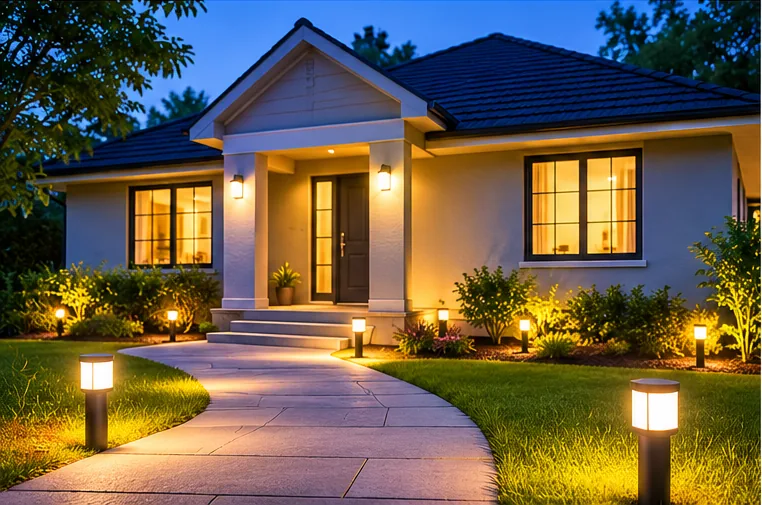
Smart fixtures can follow a schedule. They can light entrances before staff arrive and keep paths lit at night. Outdoor fixtures with motion sensors can stay dim and then go bright when a person or car comes near. That saves power and also makes movement easy to notice.
Lighting is not a full security system, though. It works best next to cameras and locks. Our list of the best wireless outdoor security cameras with motion light covers that side.
8. Useful Data for a Smarter Building
Every sensor in a smart fixture collects data. A building team can see which rooms are used and when. That data can help with cleaning schedules, room booking and space planning. In some buildings, the same sensors feed the heating and cooling system so empty zones use less air conditioning too.
This benefit depends on the system you buy. Ask the seller what data the system shares and how you can export it.
9. Easier Code Compliance and Possible Rebates
Many state and local energy codes now ask for automatic lighting controls in new buildings and big renovations. Smart fixtures make it easier to meet those rules. Many utility companies also offer rebates for networked lighting controls. Some rebate programs require the system to be on the DLC Qualified Products List, so check the list before you buy.
What this means for you: A rebate can lower your up-front cost and shorten the payback time. Call your local utility before you sign any contract.
How Much Energy Do Smart Lighting Controls Save?
This table puts the research numbers side by side. Use it to see which control type fits your building.
| Control type | What it does | Average savings found | Best places to use it |
|---|---|---|---|
| Occupancy or vacancy sensor | Turns lights off or down when a room is empty | About 24% (Berkeley Lab review) | Meeting rooms, restrooms, storage, stairs, private offices |
| Daylight harvesting | Dims lights when sunlight is strong | About 28% (Berkeley Lab review) | Rooms with big windows or skylights |
| Personal tuning | Lets each person set their own light level | About 31% (Berkeley Lab review) | Open offices, desks, studios |
| Institutional tuning | Building sets the right maximum level per space | About 36% (Berkeley Lab review) | Over-lit spaces, shops, halls |
| Several controls combined | Mixes the methods above | About 38% (Berkeley Lab review) | Most commercial buildings |
| Networked lighting controls | Connected fixtures and sensors with central settings | 47% average, range 2% to 91% (DLC study of 114 buildings) | Offices, schools, warehouses, retail |
Important note: These are averages from studies, not promises. Your savings depend on your hours, how busy the rooms are, how much daylight you get and how well the system is set up. The DOE warns that poorly calibrated daylight sensors can give little or no savings.
Cost vs Savings: A Simple Example
Prices change a lot by country, brand and building, so this example uses round numbers. Change the numbers to match your own building and your own electric bill.
| Step | Example number | How to get your own number |
|---|---|---|
| Number of fixtures | 100 LED fixtures | Count the fixtures in your building |
| Power per fixture | 40 watts | Check the fixture label or spec sheet |
| Hours on per year | 3,000 hours | Daily hours × working days |
| Yearly lighting energy | 12,000 kWh | Fixtures × watts × hours ÷ 1,000 |
| Savings with controls (47% average) | 5,640 kWh saved | Use 24% to 47% for a safe range |
| Money saved at an example rate of $0.13 per kWh | About $733 per year | Use the rate printed on your bill |
Payback time depends on your up-front cost and rebates. In the DOE field study of five advanced lighting control projects, simple payback ranged from about 6.7 to 14.9 years after utility rebates. Buildings with long hours, many empty rooms or high power rates pay back faster. Buildings that are always full and lit only a few hours pay back slower.
Pros and Cons of Smart Lighting Fixtures
| Pros | Cons |
|---|---|
| Large cut in lighting energy when set up well | Higher up-front cost than plain LED fixtures |
| Lower monthly electric bills | Savings vary a lot from one building to another |
| Lights only run where people are | Sensors need correct placement and tuning |
| Uses free daylight near windows | Some systems lock you into one brand |
| Longer life and fewer bulb changes | Networked systems need software updates and IT care |
| Better comfort, less glare, adjustable color | Staff may need training to use the settings |
| Useful room-use data for planning | Data and network security must be managed |
| Helps meet energy codes and earn rebates | Small standby power use by the control chips |
What Smart Lighting Fixtures Can and Cannot Do
| Smart fixtures can | Smart fixtures cannot |
|---|---|
| Turn lights off in empty rooms on their own | Fix a building that is badly wired or unsafe |
| Dim lights when daylight is strong | Save much in rooms with no windows through daylight control |
| Run on schedules for opening and closing times | Guarantee the same savings for every building |
| Let people set their own light level | Replace a full security system |
| Report failed fixtures on many networked systems | Work well if sensors are blocked by shelves or furniture |
| Share room-use data with other building systems | Pay back fast in a space that is always full and rarely lit |
Is It Worth It for Homes or Only Big Buildings?
Smart lighting helps both, but the size of the win is different.
In commercial buildings, lighting is a big share of electricity, and lights often run all day. So the controls make a large dollar difference. Offices, schools, warehouses and stores are the best fit.
In homes, lighting is a smaller share of the bill. Most of the home benefit is comfort, schedules, voice control and safety lights at night. If you rent or want a simple start, smart bulbs are easy. Our list of smart light bulbs that work without a hub is a good place to begin. If you own the home, smart switches control every bulb in a fixture. See how to install a smart light switch.
How to Plan a Smart Lighting Fixture Investment
- Check your current lights. Count fixtures, note their watts and write down daily hours.
- Find the waste. Walk the building at different times. Look for lit empty rooms and bright window areas.
- Pick the controls that match each space. Use sensors in rooms that are often empty. Use daylight control near windows.
- Choose open, standard systems when you can. This makes future changes and repairs easier.
- Call your utility about rebates. Ask which product list the rebate needs before you buy.
- Get a clear quote. It should list fixtures, sensors, software, setup and any yearly fees.
- Insist on commissioning. This means a trained person sets and tests every sensor after install.
- Train the people who use the space. Show them the wall controls and how to report problems.
- Check the results after a few months. Compare your bills and adjust sensor delays and light levels.
Common Mistakes to Avoid
- Skipping setup and testing. Bad sensor settings can wipe out most of the savings.
- Setting sensor timeouts too long. A light that stays on long after people leave wastes power.
- Putting sensors where shelves, plants or cubicle walls block them. Lights may turn off on people who are still there.
- Buying a closed system with no way to add other brands later.
- Forgetting network security. Put lighting controls on a protected network and keep the software updated.
- Expecting the same savings as another building. Use a safe range, not the best case, in your budget.
FAQs About Investing in Smart Lighting Fixtures
Why would investing in building smart lighting fixtures help us?
It helps you pay less for lighting and use the light better. LED fixtures use far less power than old bulbs. Smart sensors and controls then cut wasted light in empty rooms and near windows. You also get longer-lasting lights, better comfort and useful room-use data.
How much money can smart lighting fixtures save?
It depends on your building. Research found about 24% to 38% lighting energy savings from common controls, and a 47% average from networked controls on LED lighting. Multiply your yearly lighting kWh by a safe savings range and your power rate to estimate your own savings.
Are smart lighting fixtures worth it for a small office?
Often yes, if lights run long hours and rooms are empty part of the day. Start with sensors in meeting rooms, restrooms and storage rooms. These spaces sit empty the most, so they save the most.
Do smart lighting fixtures use power when they are off?
Yes, a small amount. The control chip and sensor stay awake so the light can respond. This standby power is small compared with the energy saved by turning lights off in empty rooms.
How long does it take to pay back a smart lighting investment?
In a DOE field study of five advanced control projects, payback ranged from about 6.7 to 14.9 years after rebates. Long hours, high power rates and utility rebates make payback faster.
Can I add smart controls to my existing LED fixtures?
Often you can. Many systems use add-on sensors, smart switches or small control modules. Check if your LED fixtures can dim, because dimming is needed for daylight control and tuning.
Do smart lighting fixtures help the environment?
Yes. Using less electricity means power plants need to make less power. LEDs also last longer, so fewer lights are thrown away.
What is the difference between smart bulbs and smart fixtures?
A smart bulb is a single lamp with a chip inside. A smart fixture is the whole light unit, often with a built-in sensor. Bulbs suit homes and renters. Fixtures suit new buildings and big upgrades.
Final Verdict
Investing in smart lighting fixtures helps because it stops paying for light nobody uses. The LED part cuts power use first. The sensors and controls then cut a large share of what is left. You also get better light, fewer repairs and data that helps you run the building.
The savings are not automatic, though. Pick the right controls for each space, check for rebates, and make sure the system is set up and tested. Do that, and smart lighting is one of the most practical upgrades a building can make in 2026.