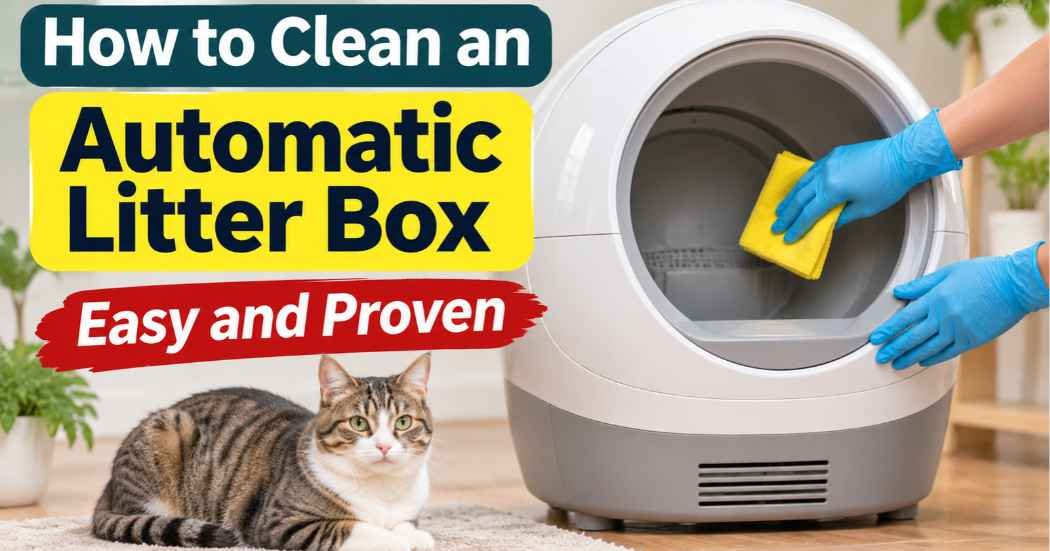
How to clean an automatic litter box comes down to one rule: keep water away from the motor and the sensors. Unplug the unit, empty the waste, wash the parts that come off, and dry them fully. This guide shows every step. It also covers daily care, weekly care, and a full deep clean. You will get the safe cleaners, the mistakes to avoid, and fixes for common problems, so you can finish the job without opening another website.
Quick answer: Unplug the box. Empty the litter and the waste drawer. Take off the bowl or globe and wash it with mild, unscented soap and warm water. Dry every part. Wipe the base with a damp cloth. Never soak or spray the base or the control panel. Empty waste daily, or when the drawer is full. Litter-Robot says to deep clean at least every 3 months. Parts differ by brand, so check your manual too.
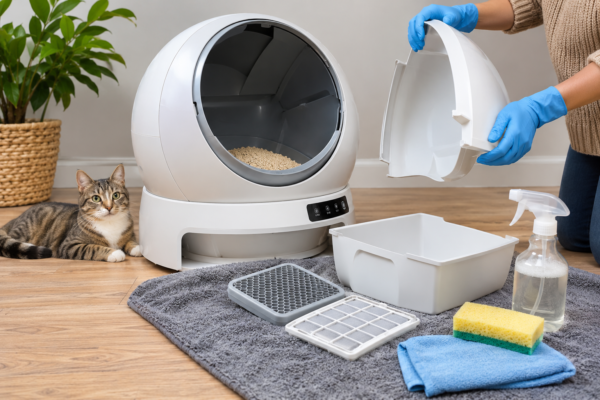
How to clean an automatic litter box step by step
An automatic litter box scoops for you. It still needs a wash. Waste, dust, and urine build up on the bowl, the drawer, and the base. Over time, this causes smells and can slow the machine down. Use these steps for a standard clean. Most models follow the same pattern.
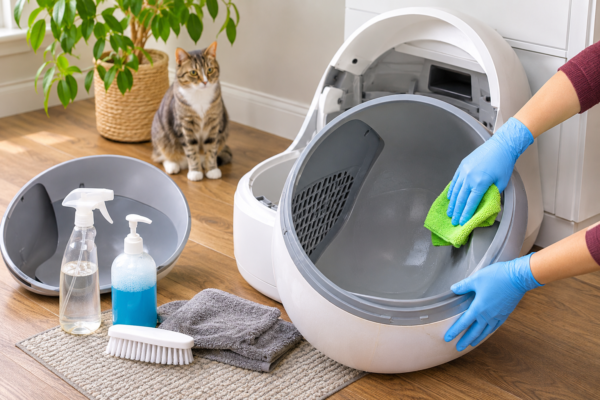
- Turn the unit off and unplug it. Never clean it while it has power.
- Put on disposable gloves. Keep your cat out of the room.
- Empty the litter. Some models have an Empty button that moves litter into the waste drawer. If yours does, use it before you unplug. If not, scoop the litter into a trash bag.
- Pull out the waste drawer or bag. Tie the bag shut and throw it away.
- Take off the parts that come off. These are often the bowl or globe, the cover, the drawer, and the filter. Your manual shows which ones your model has.
- Wash the removable parts with mild, unscented soap and warm water. Use a soft brush for stuck bits. If a part is very dirty, soak it or rinse it with a hose or shower.
- Rinse until no soap is left. Dry each part fully with a towel, then let it air dry.
- Wipe the base with a damp cloth. If you use a disinfectant, spray it on the cloth first. Do not spray the base.
- Put everything back. Add a fresh liner to the drawer. Add fresh litter up to the fill line. Plug the unit in and turn it on.
- Throw away your gloves and wash your hands with soap and water.
These steps match the deep-cleaning guide from Litter-Robot. That guide covers one model, so always check what your own manual says about each part.
What you need before you start
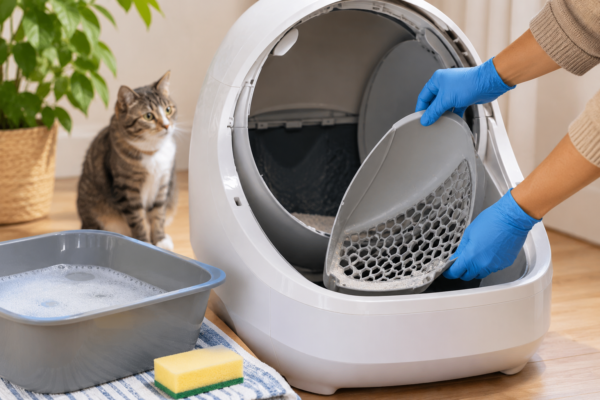
Get your supplies ready first. The job goes faster when everything is in reach. You do not need special products.
| Item | Why you need it |
|---|---|
| Disposable gloves | Keeps waste off your hands |
| Trash bags | Holds old litter and waste |
| Mild, unscented soap | Cleans well without a strong smell that cats may dislike |
| Soft brush or sponge | Lifts stuck litter without scratching the plastic |
| Two soft cloths | One damp cloth for the base. One dry cloth for sensors and drying |
| Small vacuum or hand brush | Removes loose litter around the base |
| Towel | Dries parts so new litter does not stick |
| Your user manual | Shows which parts are safe to wash on your model |
Daily and weekly care for an automatic litter box
Small jobs done often make the big clean easier. Makers set their own schedules, so treat this table as a safe starting point. The Litter-Robot dates come from its support guide. The litter change range comes from its litter box cleaning guide.
| Task | How often | Why it matters |
|---|---|---|
| Empty the waste drawer or bag | Daily, or when it is full | Stops smells and keeps waste from piling up |
| Check the litter level | Every few days | Too little litter lets urine reach the bottom |
| Wipe spills and loose litter near the base | Weekly | Keeps dust out of moving parts |
| Replace all the litter | Every 2 to 4 weeks, sooner if you smell ammonia | Old litter holds odor even when the top looks clean |
| Basic clean of the bowl or globe | Every 1 to 3 months | Removes buildup on the walls |
| Full deep clean | At least every 3 months, more often with several cats | Cleans every removable part and the base |
| Filters and worn parts | As your manual says | Old filters stop helping with smell |
Want more help with timing? Read our guide on how often to change cat litter. It covers each litter type in detail.
How to deep clean an automatic litter box
A deep clean goes further than the standard clean. You take the unit apart as far as the manual allows. You wash every part that can get wet. Do this at least every 3 months, or sooner if the smell stays after a normal clean. Homes with several cats may need it more often.
- Empty all the litter into a trash bag. Use the Empty button if your model has one.
- Return the unit to its home position if it has one. Make sure no litter is left inside.
- Turn it off, unplug it, and remove any add-ons such as ramps or mats.
- Open the cover. Lift out the bowl or globe. Take out the filter if your model has one.
- Wash the bowl or globe with mild soap and warm water. Soak or hose it if it is very dirty.
- Let the bowl or globe dry fully before you put it back. Damp plastic makes fresh litter stick.
- Wash the waste drawer. Fit a new liner and press it flat so it does not bunch up.
- Clean any inner parts only if your manual says they are removable. Some models have one, such as the Litter-Robot 4 septum.
- Wipe the base with a damp cloth. Spray any disinfectant on the cloth, never on the base.
- Reassemble the unit. Close the cover until it clicks. Plug it in and power it on. Add fresh litter.
Use this table to see which parts can get wet. When in doubt, wipe instead of wash.
| Part | How to clean it | Can it get wet? |
|---|---|---|
| Bowl or globe | Mild soap and warm water. Soak or hose if very dirty. | Yes, if your manual allows it |
| Waste drawer | Soap and water. Fit a new liner. | Yes |
| Cover | Soap and water, or a damp cloth. | Check your manual |
| Base | Damp cloth only. | No. Never soak or spray it |
| Control panel | Soft cloth, barely damp. | No. Never soak or spray it |
| Sensors | Soft dry cloth. | No water spray |
| Filter | Follow your manual. | Do not soak unless the manual says you can |
Important: Litter-Robot warns never to submerge, spray, or soak the base or the control panel. They hold the sensors and the electronics. Water there can break the unit. Treat any automatic box the same way unless your manual says otherwise.
How to clean an automatic cat litter box sensors and moving parts
Sensors tell the box when your cat has left. Dust and litter can cover them. Moving parts can also clog with dust. A few quick checks keep both working.
- Unplug the unit before you touch any sensor.
- Wipe sensor windows with a soft, dry cloth. Use a barely damp cloth only if your manual allows it.
- Use a small vacuum or a dry brush to remove loose litter around the base and the track.
- Look for litter stuck near the opening or the seals. Clear it by hand while the unit is unplugged.
- Do not use sprays near the sensors. Spray a cloth first, then wipe.
If a sensor still acts up after a clean, check your manual or call the maker. Do not open the base yourself.
How to clean an automatic pet litter box safely
Cat waste can carry germs. The CDC says cats can carry many germs in their poop. It advises changing the litter box daily and washing your hands after every clean, even if you use a scoop. An automatic box does the scooping, but the waste still sits in the drawer. So the same care applies.
The reason for daily care is simple. The CDC explains that the parasite found in some cat poop is not infectious until 1 to 5 days after it is passed. Removing waste each day gets rid of it before that point. Read the full advice on the CDC page about staying healthy around cats.
- Wear disposable gloves. Throw them away before you wash your hands.
- Wash your hands with soap and water after you finish.
- If someone in your home is pregnant or has a weak immune system, let another person do the cleaning. If no one else can, use gloves and wash your hands afterward, as the CDC advises.
- Keep the box away from food areas, children, and other animals.
- Give each cat its own box, plus one extra, as the CDC suggests.
- Open a window or run a fan when you use any disinfectant.
The CDC also says to disinfect items that touch poop or pee, such as a litter box, as often as you would disinfect your toilet or bathroom. See its page on cleaning and disinfecting pet supplies. For an automatic box, apply that to the parts that can get wet. Wipe the base with a cloth.
Safe cleaners and cleaners to avoid
Cats have a strong sense of smell. A box that smells like perfume or bleach may make your cat go somewhere else. Litter-Robot suggests unscented products and lists cleaners to skip. Some of them can also give off harsh fumes.
| You can use | You should not use |
|---|---|
| Mild, unscented dish soap and warm water | Bleach |
| An enzymatic or unscented pet-safe cleaner | Ammonia, which also smells like urine to a cat |
| A disinfectant sprayed on a cloth, then wiped on the base | Isopropyl alcohol or hydrogen peroxide |
| Plain warm water for the final rinse | Products with phenol, glycol ethers, or formaldehyde |
| A soft brush or sponge kept only for the litter box | Scented sprays or perfumed soaps |
| A dry cloth for sensors | Liquid sprayed straight onto the base or panel |
Safety note: Never mix bleach and ammonia. The mix makes toxic fumes. Litter-Robot also says not to use bleach inside the globe, because it can cause irritating fumes. Stick to mild soap and water for the parts your cat touches.
What you can and cannot do when cleaning
| You can | You should not |
|---|---|
| Wash the bowl, drawer, and cover if your manual allows it | Dunk the base or the control panel in water |
| Soak a very dirty bowl or globe | Put wet parts back on the unit |
| Use the Empty button before you unplug | Clean the unit while it is plugged in |
| Add a fresh liner to the drawer each time | Reuse a torn or wet liner |
| Keep using the same litter after a clean | Switch litter brands the same day, since your cat may refuse the box |
| Wipe the base with a damp cloth | Use a pressure washer or a steam cleaner on it |
| Wash your hands and tools after the job | Use the same sponge for dishes and the litter box |
Problems after cleaning and how to fix them
| Problem | Likely cause | What to do |
|---|---|---|
| The box still smells | Old litter, a full drawer, or an old filter | Change all the litter. Empty the drawer. Replace the filter as your manual says |
| Litter sticks to the bowl | The bowl was still damp | Empty it, dry it fully, and refill |
| Your cat avoids the box | A strong cleaner smell or leftover soap | Rinse well. Use only unscented soap next time |
| The unit will not start | A part is not seated, or the power is off | Check that the bowl and cover are locked in. Check the plug. Then see your manual |
| The cycle stops or acts oddly | Dirty sensors or litter in the track | Unplug it. Wipe the sensors with a dry cloth and clear any litter |
| Litter is stuck on the walls | Urine buildup | Do a deep clean and soak the bowl |
Sudden changes in how your cat uses the box can point to a health issue. If your cat strains, cries, or stops using the box, call your vet. Do not blame the cleaning first.
Pros and cons of cleaning on a regular schedule
Pros
- Less odor in your home.
- A fresh box that your cat is happy to use.
- Sensors and moving parts stay clear of dust and litter.
- Less buildup on the bowl and the drawer.
- You touch waste less often, since the machine does the scooping.
Cons
- A deep clean takes longer than washing a plain tray.
- The base and panel cannot get wet, so you must wipe them with care.
- Parts must dry fully before you reassemble.
- You need to read the manual for your exact model.
- You use extra liners and litter each time you reset the box.
Tips to keep your automatic litter box cleaner for longer
- Empty the waste drawer at the same time each day. A habit is easier to keep.
- Keep the litter at the fill line. Too little litter lets urine reach the bottom.
- Use the litter type your manual recommends.
- Place a mat in front of the box to catch tracked litter.
- Put the box in a quiet spot with room around it, away from food bowls.
- Mark your next deep clean on your phone calendar.
Litter often lands on the floor around the box. A steam vacuum for pets can help with sticky spots and smells on hard floors. If you are away a lot, a camera shows how often your cat visits the box. See how to set up a pet camera and our best pet camera with two-way audio picks. A smart pet feeder with a camera can also help you watch your cat’s routine.
Frequently asked questions
How do you clean an automatic litter box?
Unplug it and empty the litter and waste. Wash the removable parts with mild, unscented soap and warm water. Dry them fully. Wipe the base with a damp cloth. Put it back together and add fresh litter.
How often should you clean an automatic litter box?
Empty the waste daily or when the drawer is full. Do a basic clean of the bowl every 1 to 3 months. Do a full deep clean at least every 3 months. Use shorter gaps if you have several cats or the box smells.
How do you deep clean an automatic litter box?
Empty all the litter, unplug the unit, and take off the removable parts. Wash the bowl and the waste drawer with mild soap and warm water. Let them dry fully. Wipe the base and panel with a damp cloth only. Reassemble, plug in, and refill.
Can you wash an automatic litter box with water?
You can wash the parts that come off, if your manual allows it. Never submerge, spray, or soak the base or the control panel. They hold the sensors and the electronics.
What cleaner is safe for an automatic cat litter box?
Mild, unscented dish soap and warm water work well. An enzymatic or unscented pet-safe cleaner is also fine. Avoid scented products, because cats may skip a box that smells strong.
Can I use bleach to clean an automatic litter box?
It is best not to. Litter-Robot lists bleach among the cleaners to avoid and says not to use it inside the globe. It can cause irritating fumes. Never mix bleach with ammonia.
How do I clean an automatic pet litter box if I am pregnant?
The CDC says pregnant people should avoid cleaning litter boxes if possible. Ask another household member to do it. If no one else can, wear disposable gloves and wash your hands afterward. Talk to your doctor if you have questions.
Why does my automatic litter box still smell after cleaning?
The litter may be too old, the drawer may be full, or the filter may be worn. Change all the litter and empty the drawer. Replace the filter as your manual says. Make sure every part is fully dry.
Should I change all the litter when I clean the box?
Yes, for a deep clean. Empty all the old litter, wash the parts, dry them, and refill with fresh litter. Litter-Robot suggests replacing all litter every 2 to 4 weeks, sooner if you smell ammonia.
Do I need to unplug the box before cleaning?
Yes. Turn the unit off and unplug it before you take parts off or wipe the base. This keeps the motor from running while your hands are inside.
Your simple cleaning plan
Empty the waste every day. Change all the litter every 2 to 4 weeks. Do a deep clean at least every 3 months. Use mild, unscented soap and warm water on the parts that come off. Wipe the base with a damp cloth and keep water off the electronics. Dry everything before you refill. If your cat suddenly avoids the box or strains, call your vet.