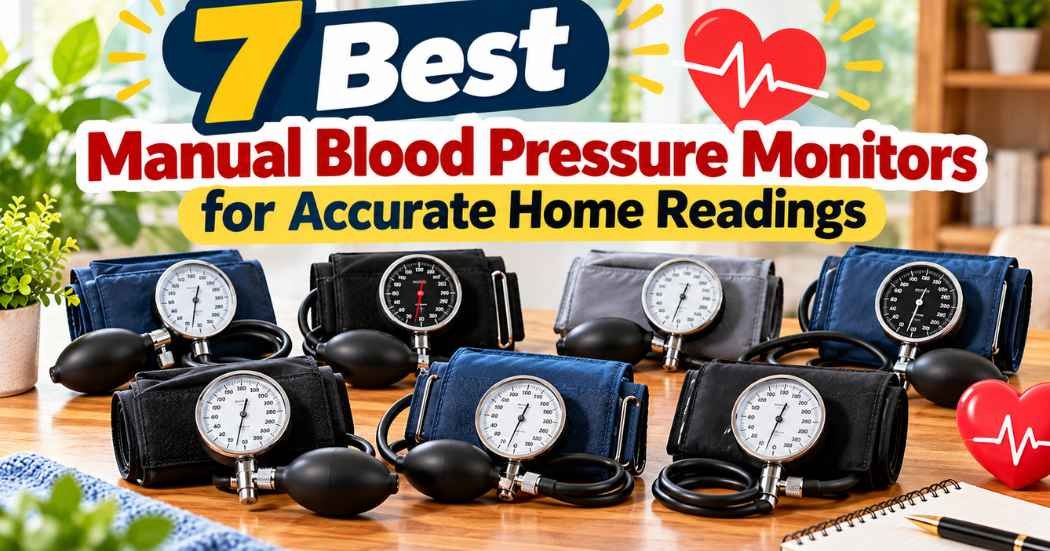
The best manual blood pressure monitor for you depends on your comfort with self-measurement and the required arm fit. These devices vary by cuff size, ease of one-handed use, and the inclusion of calibration tools for accuracy.
Best overall: ADC Prosphyg 760, which offers a 20-year calibration warranty and an optimized cuff design that helps prevent common measurement errors by ensuring a proper fit for most adults. Most durable construction: MDF Calibra Aneroid, as it features a stress-tested gauge designed to endure heavy use without a pin stop, making it a reliable choice for frequent, daily monitoring. Best for large arms: LotFancy Large Cuff, which provides a specialized fit for arm circumferences up to 20 inches, ensuring accuracy for users who struggle with standard, smaller cuffs.
The rest of this guide is for anyone seeking to monitor their health at home with professional-grade, manual equipment.
How We Picked
We compared 16 different listings for manual blood pressure monitors to find the most reliable options for home and clinical use. Each selected product had to clearly state its cuff size range, accuracy specifications, and included accessories. We excluded any models that lacked clear documentation regarding their calibration standards or failed to provide a complete kit for immediate use. Our focus remained on build quality and documented features, ensuring that every recommendation is based on the manufacturer’s own specifications.
1. ADC Prosphyg 760 Professional Pocket Aneroid Sphygmomanometer

Best for: Reliable home monitoring with long-term support.
The ADC Prosphyg 760 is built for precision, featuring a black enamel manometer that meets rigorous ANSI/AAMI/ISO 81060-1 accuracy standards. The included nylon Adcuff is designed to minimize miscuffing with a built-in size guide.
If your limb circumference falls outside the 9-inch to 15.7-inch range, this specific cuff won’t provide an accurate reading. Users often make the mistake of forcing a cuff that’s too small, which leads to falsely elevated blood pressure results. Always measure your arm before purchase to ensure a proper fit.
This kit comes with a leatherette carrying case, making it easy to store or transport. Every unit is assembled, inspected, and packaged in the USA. The chrome-plated brass air release valve is individually leak tested to ensure reliability.
Pros
- 20-year calibration warranty
- 3-year system warranty
- Latex-free cuff material
- Precision-crafted manometer gauge
Cons
- Limited to standard arm sizes
- Stethoscope not included
The decision rule is simple: if you need a long-term, latex-free device for standard adult limbs, this is your tool. If you require a larger cuff or an integrated stethoscope, you must look elsewhere.
2. MDF Calibra Aneroid

Best for: Frequent users needing high-durability hardware.
The MDF Calibra Aneroid stands out for its robust construction, having been stress-tested over 3,000 times. The gauge is designed without a pin stop, which allows for smoother needle movement during the deflation process, helping you catch subtle heart sounds more clearly. Because it’s calibrated five times and certified to 300 mmHg, it maintains an accuracy of +/- 3 mmHg.
The high-molecular polymer nylon cuff is resistant to moisture and abrasion, which is helpful if you plan to keep the device in a clinical bag. This unit isn’t recommended for users who prefer a D-ring cuff design, as this model focuses on a traditional wrap-style application. If you require easier cleaning, the bladder is fully removable from the cuff.
The inflation system uses a high-density, non-stick bulb. You should use the screw-type valve for precise deflation control during your measurements.
Pros
- Lifetime calibration guarantee
- Abrasion-resistant, moisture-resistant cuff material
- High-contrast, easy-read dial
- Removable bladder for simple maintenance
Cons
- Lacks a D-ring for self-application
- Requires significant manual practice for accurate one-handed use
- Traditional wrap-style cuff may be slower to secure than modern alternatives
3. PARAMED Aneroid Sphygmomanometer

Best for: Users wanting a universal fit.
The PARAMED Aneroid Sphygmomanometer includes a universal cuff that fits arm circumferences from 8.7 to 16.5 inches (22–42 cm). Its zinc alloy body and non-stop manometer mechanism provide a sturdy feel built to withstand regular transport in its included carrying case.
The air needle valve allows for smooth pressure relief, which is essential for accurate readings. If you struggle with dust accumulation, this device features an improved supercharger check valve with a reticulated filter. This specific addition prevents dust from clogging the internal mechanism.
It isn’t the right choice for medical professionals who require a stethoscope to be included in the set, as this is a cuff-only kit. Before purchasing, verify your arm size; if your measurement falls outside the 8.7 to 16.5-inch range, the velcro strip won’t secure properly, compromising your ability to self-measure.
Pros
- Universal cuff size range
- Dust-filtering check valve
- Portable and lightweight kit
Cons
- Stethoscope sold separately
- Requires manual assembly of parts
4. LotFancy Manual Large Blood Pressure Cuff Adult

Best for: Individuals with larger arm circumferences.
The LotFancy Large Cuff is specifically designed for big arms, accommodating measurements from 13 to 20 inches. It includes a zero calibration tool, allowing you to manually adjust the gauge if it drifts from the zero mark.
The high-contrast dial is large and clear, making it a thoughtful option for elderly users or those with lower vision. This kit isn’t intended for pediatric use due to the specific size of the cuff provided. If you’re uncertain about your fit, measure the circumference of your upper arm before purchasing. A cuff that’s too small will cause inaccurate, falsely high readings.
The device features a 300mmHg gauge that meets ANSI standards with a ±3mmHg accuracy range. While the branding on your package may read either LotFancy or MEDLOT, both are identical products from the same manufacturer.
Pros
- Fits arms up to 20 inches
- Includes zero calibration tool
- High-contrast dial for visibility
- Durable, latex-free nylon construction
Cons
- Too large for children
- Stethoscope not included in the kit
- Requires manual calibration to ensure long-term precision
- Branding may vary during the company’s transition period
5. Greater Goods Adult Aneroid Manual Blood Pressure Cuff

Best for: Students learning manual blood pressure techniques.
The Greater Goods Aneroid features a color-coded dial that highlights the standard healthy blood pressure range, taking the guesswork out of reading your results. The D-ring design makes it much easier to secure the cuff on your own arm without it sliding down during inflation. Use the artery alignment markings and the placement guide to ensure the cuff is positioned correctly before you begin.
The reinforced metal stabilizer on the bulb helps keep your pumping motion steady. To operate this device with one hand, turn the air-release valve clockwise until it’s fully closed before you start pumping. This unit is clinically tested for precision, delivering repeatable readings within ±3mmHg.
It isn’t suitable for users who need a specialized cuff for very small or very large limbs. This model is strictly sized for adult upper arms ranging from 22–42 cm. If you’re measuring outside of this range, the readings won’t be reliable.
Pros
- Color-coded dial for reading
- Easy D-ring cuff design
- Includes two-year coverage
Cons
- Standard adult size only
- Stethoscope not included
The kit is lightweight and fits into a 7″ x 4″ x 2.5″ carrying case. This makes it convenient to pack in a backpack for travel between classes or clinical shifts. If you have trouble getting started, the St. Louis-based support team is available to assist you.
6. Primacare DS-9185-BK Aneroid Sphygmomanometer BP Kit with 5 BP Cuffs
Best for: Families or clinics needing multiple cuff sizes.
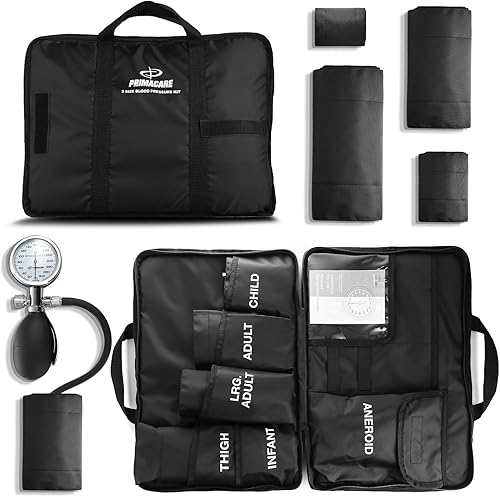
The Primacare DS-9185-BK is the most versatile option, as it comes with five different cuff sizes. This makes it a practical solution if you need to monitor blood pressure for different family members or patients, ranging from infants to large adults.
You should choose this kit if you require a range from pediatric to thigh measurements. If you’re a single user who only needs one standard cuff, the extra equipment will likely create unnecessary clutter.
The device features a calibration screw that allows you to adjust the gauge. This is a critical maintenance step for those who rely on precise, manual readings.
The cuffs are constructed from a soft nylon material designed to minimize irritation. This is particularly beneficial for users with sensitive skin who find standard medical equipment uncomfortable during frequent monitoring.
The waterproof carrying case includes a sturdy handle for portability. It protects your equipment from the elements, making it ideal for mobile clinical work.
Pros
- Five different cuff sizes
- Waterproof carrying case
- Adjustable calibration screw
Cons
- More parts to manage
- Heavier to carry
7. Santamedical Manual Blood Pressure Cuff

Best for: Beginners who want a simple, straightforward device.
The Santamedical Manual Cuff is built for simplicity, focusing on a high-contrast dial and a large air-release valve for controlled deflation. The cuff design leaves out the D-ring, which can be faster to wrap and secure once you have practiced the technique.
It provides a 300 mmHg range, which is standard for most manual monitoring needs. This device isn’t ideal for users who struggle with coordination, as the lack of a D-ring requires a bit more dexterity to keep the cuff in place while pumping.
If you’re new to manual monitoring, recognize that the D-ring omission is a design choice for speed. If you find the cuff slipping during inflation, you’re likely not pulling the end tight enough before securing the velcro. Practice the wrap on a table before trying it on your arm.
The device maintains a ±3 mmHg deviation, ensuring your readings remain reliable over extended periods of use. However, you must prioritize a steady hand during the release phase. If you can’t maintain a slow, consistent turn on the valve, your results will be inconsistent.
Pros
- Precise 300 mmHg range
- Simple, intuitive dial
- Controlled deflation valve
Cons
- No D-ring on cuff
- Basic carrying case
How to Choose in Sixty Seconds
Which cuff size do I actually need?
You must measure the circumference of your upper arm at the midpoint between your shoulder and elbow. If your arm is too thin or too thick for the cuff, your readings will be inaccurate because the pressure won’t be distributed correctly. Most standard cuffs fit a range of 9 to 15 inches, but if you fall outside these numbers, look for a kit like the LotFancy Large Cuff or a multi-cuff set like the Primacare DS-9185-BK. Always confirm the range printed on the cuff before you finalize your order.
Why do some kits include a stethoscope and others do not?
A manual blood pressure monitor requires a stethoscope to hear the Korotkoff sounds, which indicate your systolic and diastolic pressure. Many kits, such as the ADC Prosphyg 760 or the Greater Goods Aneroid, are sold as “cuff-only” sets. If you’re a beginner, you must confirm if the kit includes a stethoscope; if it does not, you’ll need to buy one separately to take a reading.
Does the gauge calibration matter for home use?
Calibration is the most important factor for accuracy. An aneroid gauge can lose its precision if it’s dropped or used heavily. Models like the ADC Prosphyg 760 or the MDF Calibra Aneroid offer warranties or specific construction features—like the lack of a pin stop—to maintain accuracy.
Related guides
- Best Smart Home Control Panel 2026: Top 5 Picks
- Best PoE Switch for Home Network 2026 – Top 7 Picks
- Wireless Door Alarm Guide 2026: Top Home Security Pick
Frequently Asked Questions
Is the simplest model on the list enough for a beginner?
Yes, the Santamedical Manual Cuff is suitable for beginners. It features a high-contrast dial and a precise air-release valve for essential monitoring. Note that the lack of a D-ring requires practice to apply the cuff without assistance.
What is the first thing that goes wrong with these devices?
The inflation bulb and air-release valve are the primary maintenance points. Dust can clog the valve, so models like the PARAMED and LotFancy include a mesh filter to prevent debris buildup. Always store your device in its provided case to protect these components.
Does owning a manual monitor require regular maintenance?
Manual monitors require occasional calibration checks. If the needle deviates from the zero mark, use the included calibration tool found with the LotFancy and Primacare models. Keep the device clean by wiping the cuff with a damp cloth after each use.
Can I use these devices to measure someone else’s blood pressure?
Yes, all listed monitors are suitable for measuring others. Using these devices on another person is often easier than self-measurement because it simplifies cuff stabilization and pump operation. Ensure the subject is seated with their arm supported at heart level.
Closing best manual blood pressure monitor
For most users, the ADC Prosphyg 760 is the most dependable choice due to its long-term calibration warranty and cuff markings that prevent miscuffing. If you require a tool for intensive use, the MDF Calibra Aneroid offers a gauge stress-tested over 3,000 times.
When choosing, prioritize cuff size over brand. If your arm circumference is 13 to 20 inches, select the LotFancy XL cuff; for standard adult needs, the Greater Goods or Paramed models provide universal fit ranges. If you’re monitoring multiple family members, the Primacare kit includes five different cuff sizes, ranging from pediatric to thigh, whereas other models typically include only one.
Always check if your kit includes a stethoscope, as most professional aneroid sets exclude them. To ensure accuracy, look for devices featuring a mesh filter in the valve, which prevents dust from clogging the mechanism. If you notice your readings drifting, models like the LotFancy or Primacare include a calibration tool or screw, allowing you to maintain precision without replacing the device.